
By Melissa L.A. Bishop – Independent
Edmonton, Alta – On Friday, March 20th, 2020, Alberta Premier, Jason Kenney announced that the Edmonton Expo Centre is converting into a COVID-19 facility for people experiencing homelessness. Kenney said it would be “activated as a location for people with illness” with “a separate area of surge capacity for those who are not showing signs or symptoms of COVID-19.” The Edmonton Expo Centre will feature a daily drop-in centre operating from 8 AM to 8 PM for those not experiencing symptoms of illness. A second 24/7 area will be an “isolation shelter”. It is for “people experiencing homelessness who have been exposed to COVID-19, or have cold or flu symptoms, to recover and protect others by self-isolating.” Images from within the facility show rows of ten black cots with adjoining chairs spaced out in columns of about ten. These images mean close to 100 people could be within a hall.
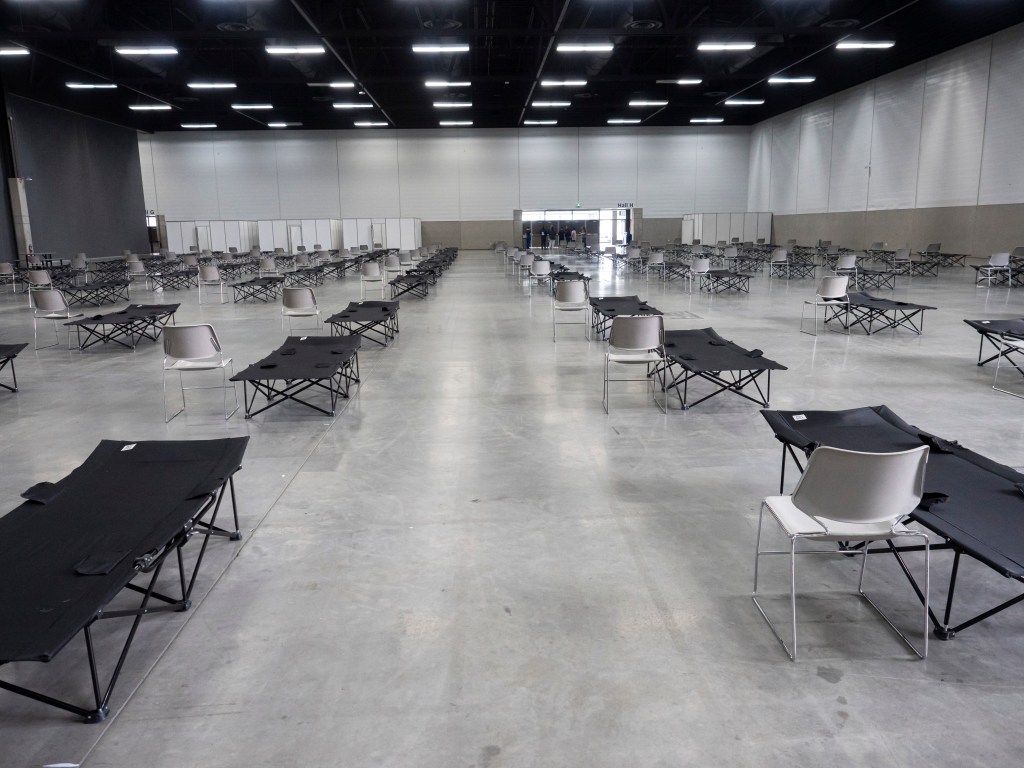
Shortly after Kenney’s update, chief medical officer Dr Hinshaw announced 49 new cases, with 11 potential community transmissions within Alberta. Dr Hinshaw reiterates the absolute importance of social distancing from Friday’s briefing. She states, “if you are feeling sick with fever or cough, or even mild cold-like symptoms, you must stay home and away from others.” However, guidelines state that agencies and shelters for homeless people are exempt from the limits put in place by public health interventions. The situation highlights a difficulty for the agencies working tirelessly to mitigate risks for Edmonton’s most vulnerable in this pandemic and presents a possible threat to this population. Current data from Homeward Trust indicates that as of February 2020, 754 people of the 1904 current homeless population either only access emergency shelters or are entirely unsheltered. Therefore, hundreds of people will isolate collectively at shelters if symptomatic.
Justin Marin, a 27-year-old frontline social worker with AHS, states concern with a 12-page guideline from the Alberta government COVID-19’s resources. The information advocates outdated material from March 16th, 2020. On page five, it recommends for agencies to “keep, at a minimum, of about one metre (three feet) between sleeping mats with “head to foot” placement.” The document does suggest to increase the space between mats, if possible. However, the current minimum is two metres or six feet. Having relevant and current messaging is vital for everyone’s health and safety. Messaging for all COVID-19 guidance must be up-to-date, especially for at-risk populations and employees. This small error highlights a potentially fatal mistake if overlooked by an agency not knowledgeable about provincial recommendations. Marin stresses a vital takeaway for everyone to follow during this unprecedented crisis. “The most important thing people can do is to be properly informed and always access multiple pieces of information.”
 The Ambidextrous Adventures I Left to Write